Impermanent Environmental Projects
Gilded Dry Stone Walls — Treasure and Treasure
While researching the dry stone walls that shape the landscape around me, I discovered that the stone used locally is known as forest marble — formed over millions of years from tidal sand deposits that captured and fossilised sea life. On closer inspection, small fossils are visible within the stone. Each discovery feels like finding treasure embedded in the land.
At the same time, I came across the idea that trace amounts of gold exist within seawater — another form of dispersed, almost invisible treasure.
This pairing shaped the work. Delicate gilding was applied to sections of the dry stone walls, briefly making visible the notion of seawater gold before allowing it to weather and fade back into the landscape. The gold initially draws the eye; closer attention reveals the fossils held within the stone itself.
Two forms of treasure — one ancient and embedded, the other fleeting and surface-bound — held in quiet dialogue, before time reclaims the intervention.
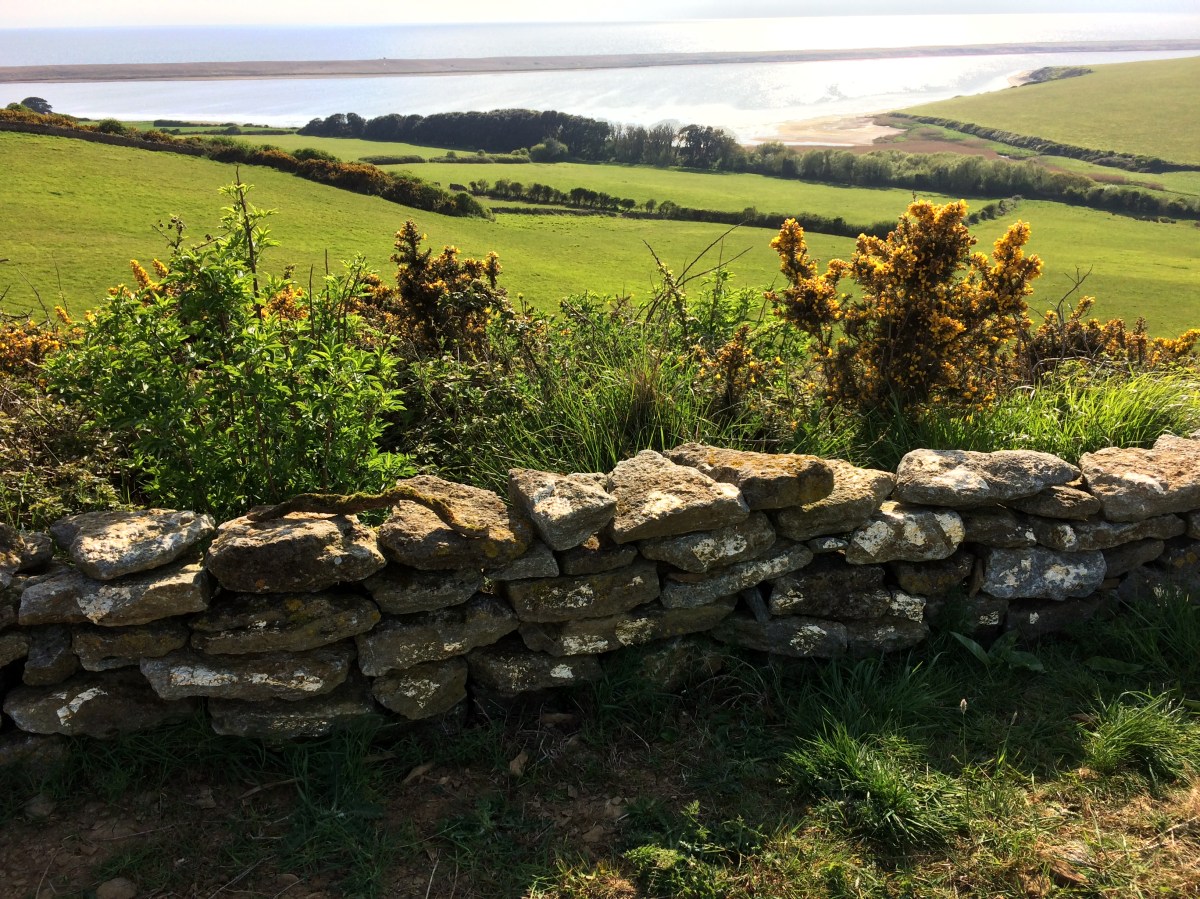


‘The gilded orchard’


Weaving Shapes Against the Fading Light
This work emerged while watching nesting birds busying themselves with the task of building — gathering, weaving and preparing a place to raise their young. My gesture is not a nest, yet I became aware of myself sketching with vine against the sky, tracing patterns in the fading light.
The act of weaving felt instinctive — a quiet echo of natural labour — held briefly against the evening before returning to the landscape.


Portland Stones
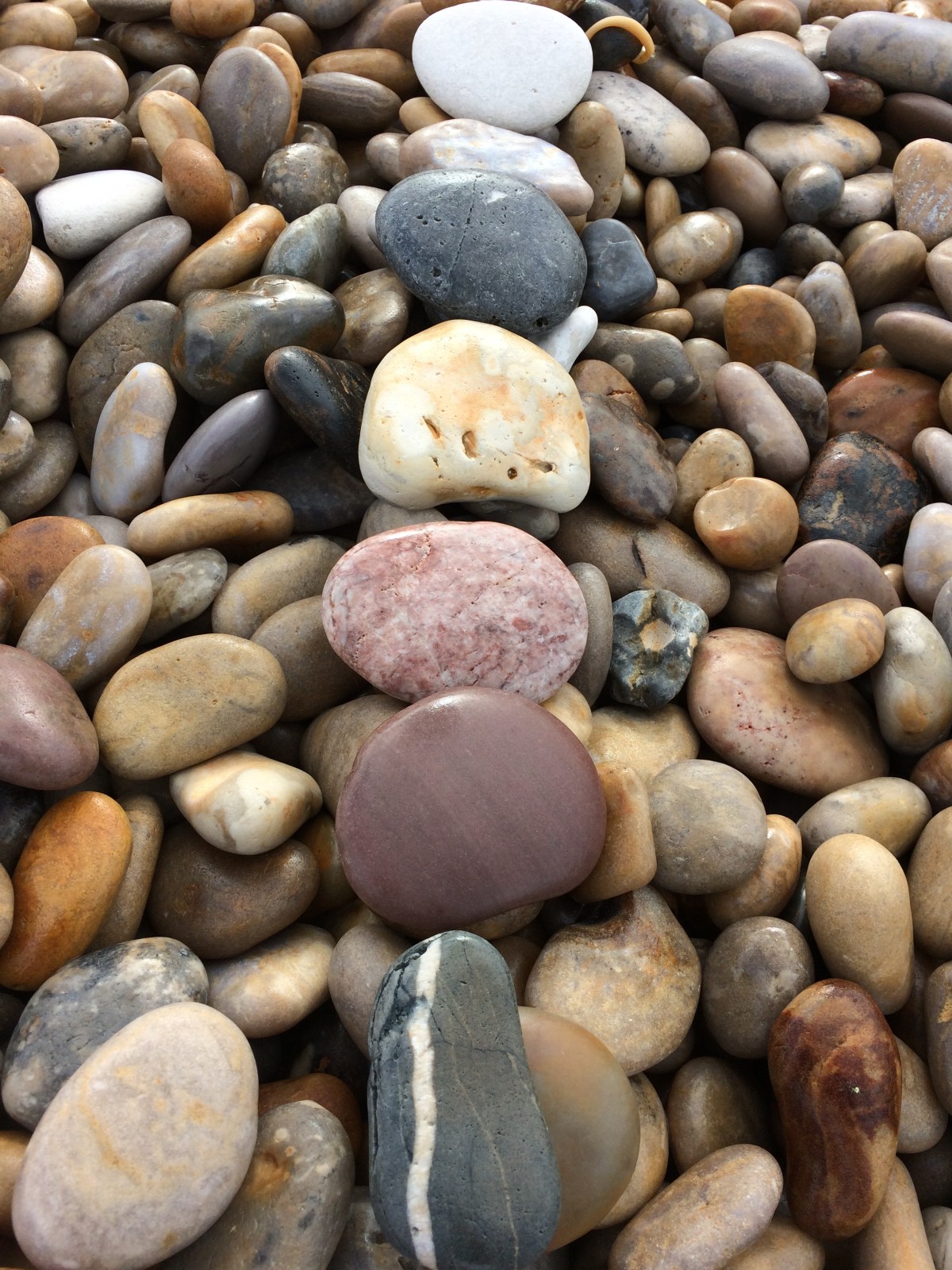
This work emerged from looking more closely at Chesil Beach and the way its stones shift along the shoreline through longshore drift. At the Portland end, the pebbles are large and weighty; gradually they diminish in size as the beach stretches toward West Bay.
There is a story that smugglers, on moonless nights, could tell where they were by the feel of the stones beneath their feet. Whether true or not, it speaks to a bodily knowledge of place — an understanding formed through touch, scale and attention.
The variation in stone size inspired this temporary arrangement made at the Portland end of the beach. Once formed, the stones were left to the beach and its ongoing movement.
Hanging Leaves
This work developed while I was exploring movement and shadow for another project. Each year I am struck by the transformation of the virginia creeper — how, within the space of a week, it shifts from dense green to bare stem. The plant sheds its leaves and withdraws, resting through winter.
Using fallen leaves, I made a series of hanging and ground-based arrangements. Suspended forms caught light and cast shifting shadows; others lay directly on the earth. The pieces were temporary and later documented through film.
Below are still images of one hanging work and one ground piece, followed by links to the two accompanying films.


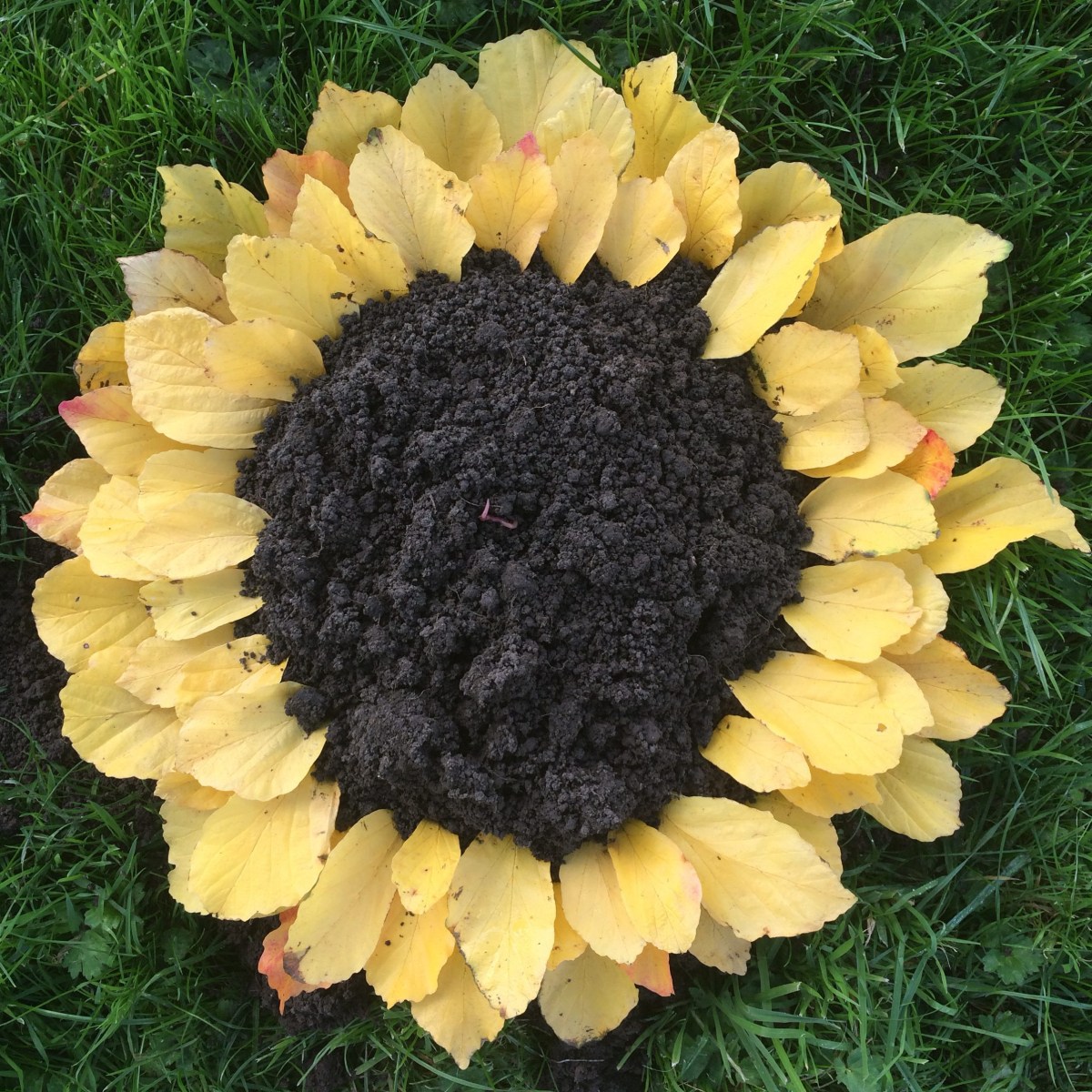
Below: Using a molehill, an earthworm and fallen autumn leaves, I formed a brief sunflower — a small gesture made directly from what the ground had already offered.
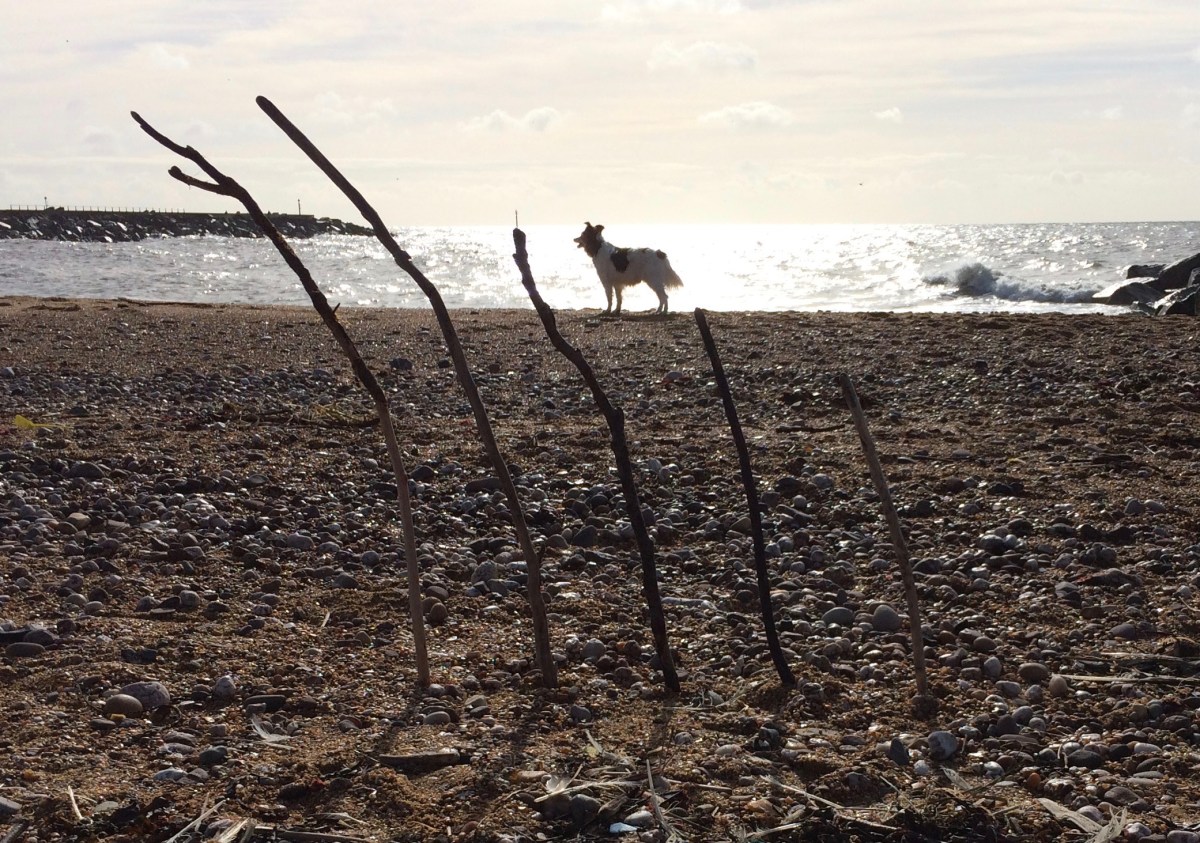
Sometimes the act of making is entirely spontaneous. While walking along the beach, I noticed a scatter of sticks washed in by the tide. A dog was playing nearby, and the simple association between dog and stick felt impossible to ignore.
As I began placing the sticks in the sand, I became aware of the depth of field forming — a receding line drawing the eye toward sea and horizon. A casual gesture became a small study in perspective, scale and play.
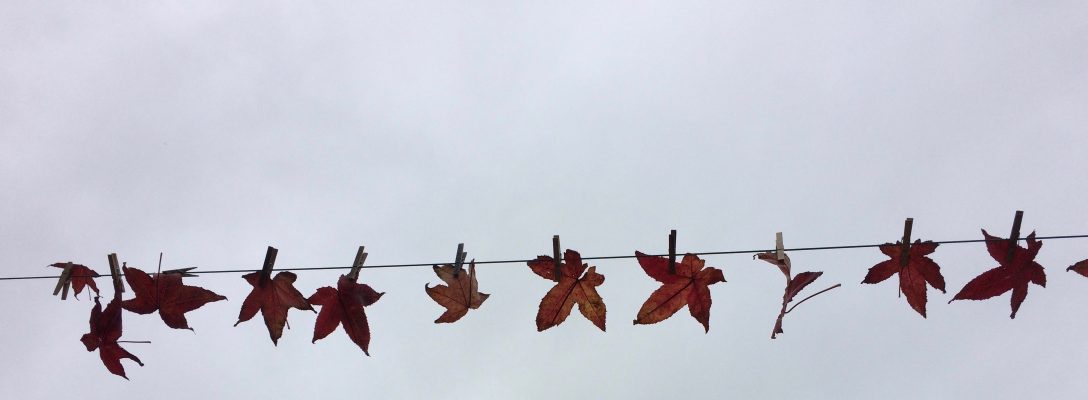
The contrast of wind-blown autumn leaves against a white sky prompted this gesture. Using a washing line, I caught the leaves as they moved — briefly suspending what would otherwise pass unseen.
Toxic Spiral
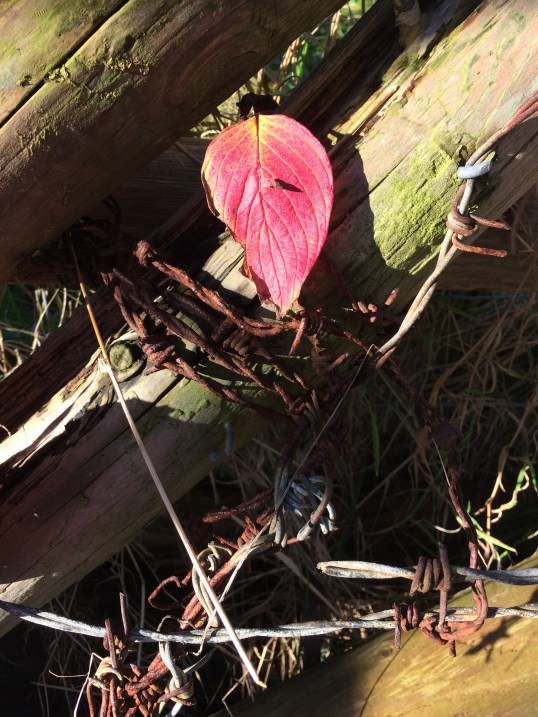
Formed from ragwort— toxic to some grazing animals —, an old farm post and rusted barbed wire, this temporary arrangement reflects on boundaries and toxicity within rural space — beauty and danger held in the same gesture.

Below: Shoreline Gesture
While in Greece, the reality of ongoing sea crossings was present in public conversation and media. That wider context sat quietly behind these beach interventions.
Using found pebbles and wave-worn glass — once sharp, now softened by the sea — I formed simple, temporary placements on the shore. The pieces were left in place to be re-dispersed by tide and weather.


While looking into the history of barbed wire, I became interested in how its introduction reshaped the farmed landscape. Particularly in the United States, it enabled landowners to fence boundaries, contain livestock and define territory in ways that had not previously been possible.
This shift — from open range to enclosed land — altered both movement and ownership, marking space through tension and control.


 Online Gallery & Consultancy