Cut Down – Built Up
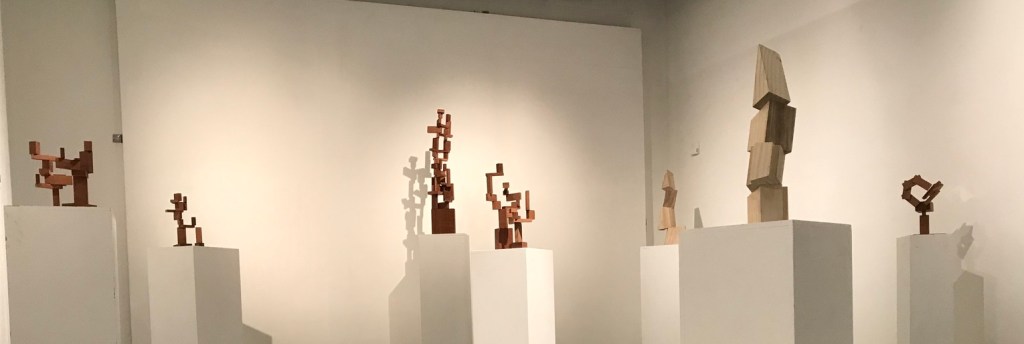
Cut Down – Built Up is a series of assemblage sculptures exploring balance in relation to sustainability and the built environment.
The works are constructed from carpenters’ offcuts — primarily certified Sapele, a hardwood sourced from the Congo rainforest. I retain the original workshop markings, cuts and pencil lines, allowing the industrial history of each fragment to remain visible. The material carries its own narrative of extraction, use and repurposing.
Each individual sculpture is titled Balance, emphasising both physical equilibrium and the wider ecological tensions implicit in the use of rainforest timber within construction. Through careful placement and counterweight, the discarded becomes reconfigured — cut down, then built up.
Many of the works hold a deliberate sense of precariousness. They appear temporarily resolved, as though a small shift could unsettle them — echoing the fragile balance between consumption, sustainability and responsibility within the built world.
Individual works from the series have been exhibited at various locations across Dorset. The complete collection has not yet been shown together.
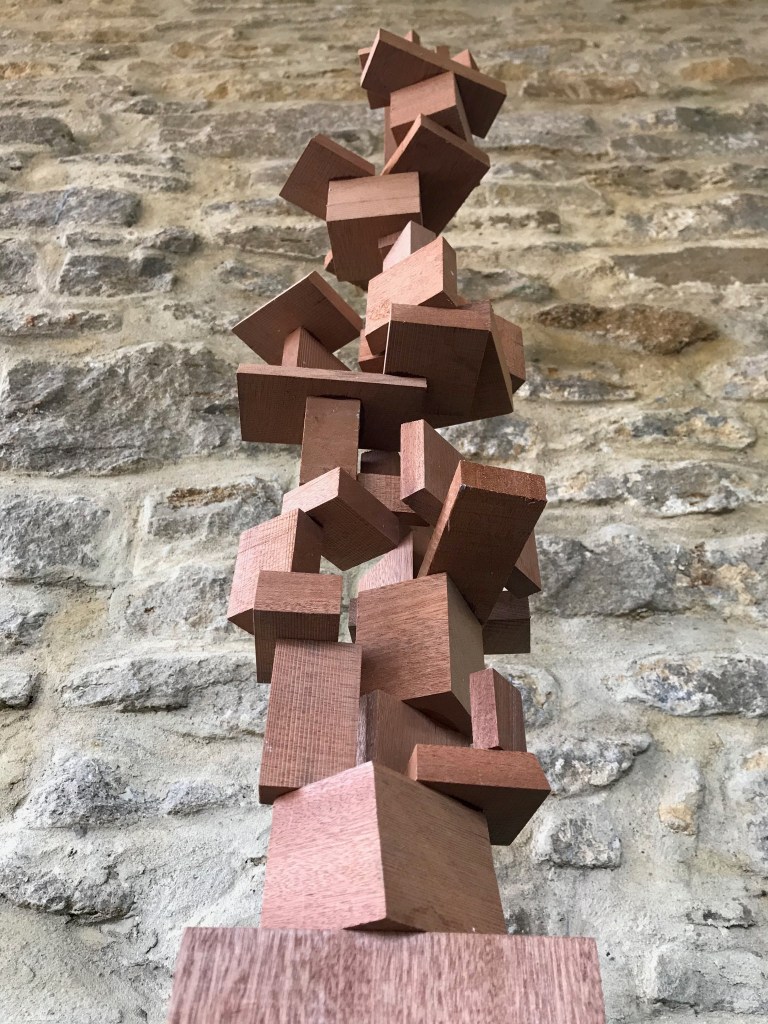
Reclaimed Sapele hardwood
Held in deliberate equilibrium


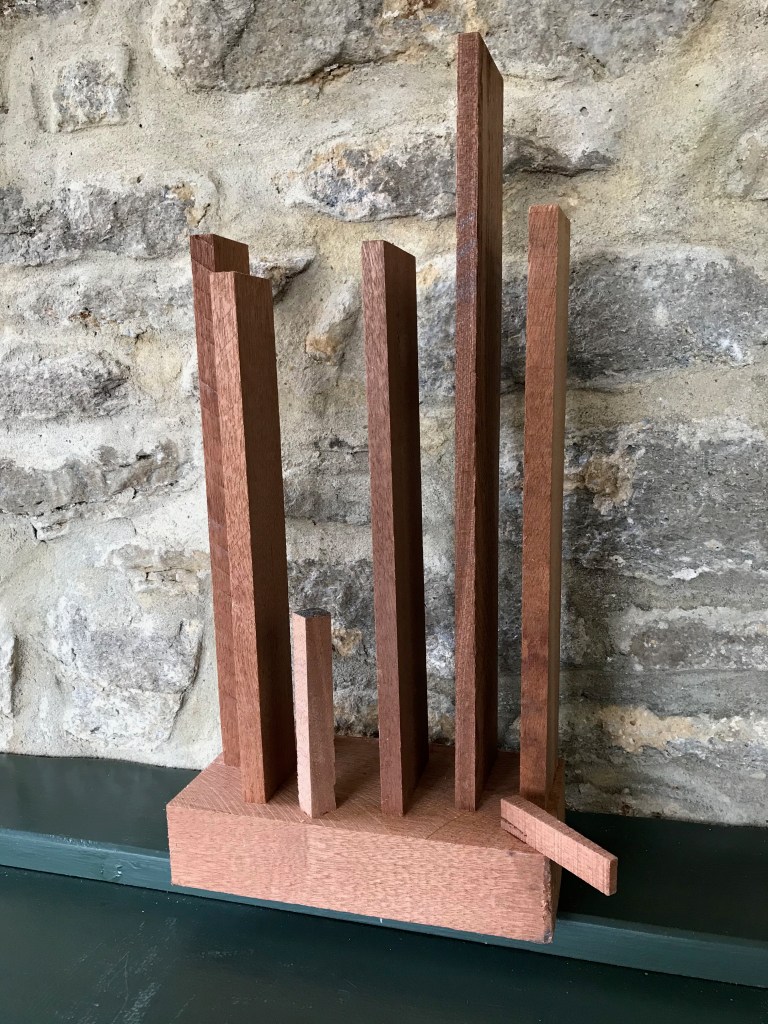
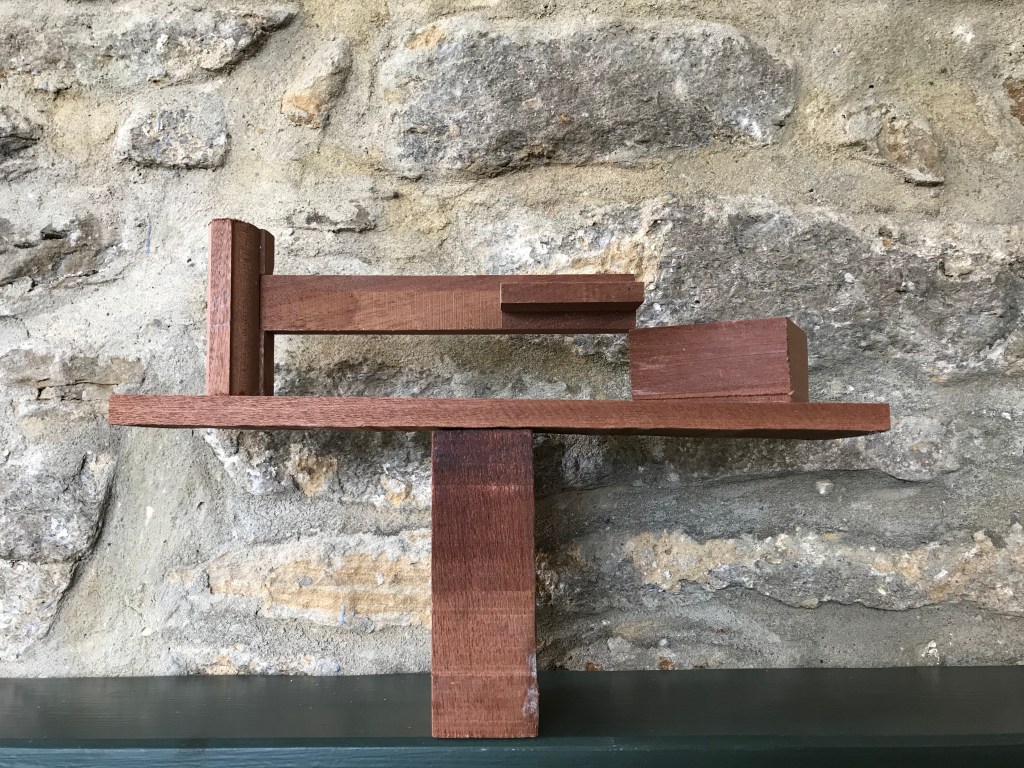
Reclaimed hardwood
Held in shifting states of equilibrium
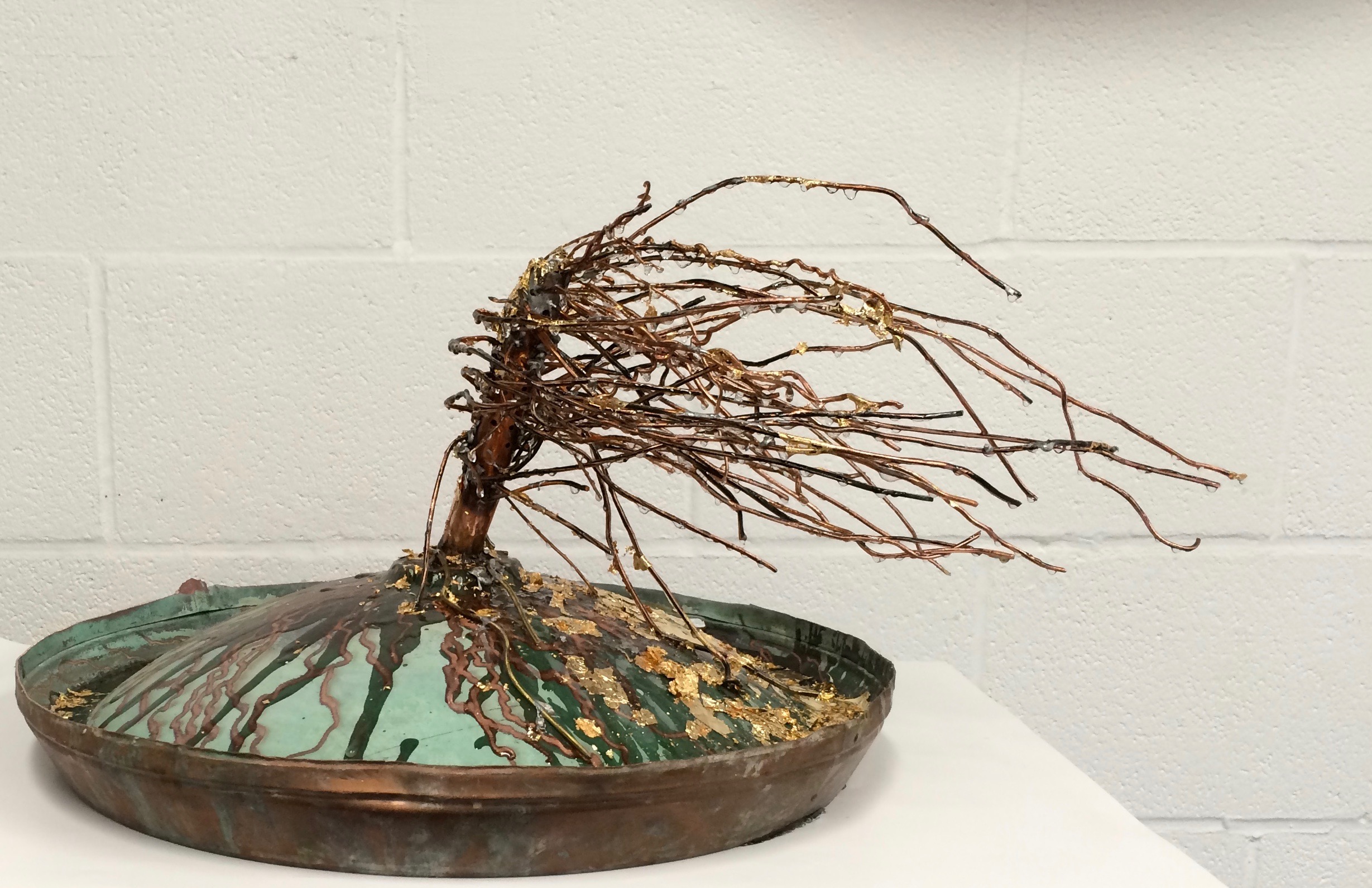
The Sculptor
Recycled metal, resin, gold leaf
The Sculptor should be viewed while listening to the spoken recording below the image.
This work was inspired by Aeolian processes — the shaping of form by wind — and by the coastal trees near where I live. Over time, the persistent south-westerlies have bent and contoured their trunks and branches, quite literally sculpting them.
Formed from repurposed metal, the piece acknowledges both natural and human agency in shaping material. The addition of resin and gold leaf introduces contrast — endurance and value set against exposure and weathering. Here, the “sculptor” is not solely the artist, but wind, time and environment — forces that shape form slowly, persistently and without ceremony.
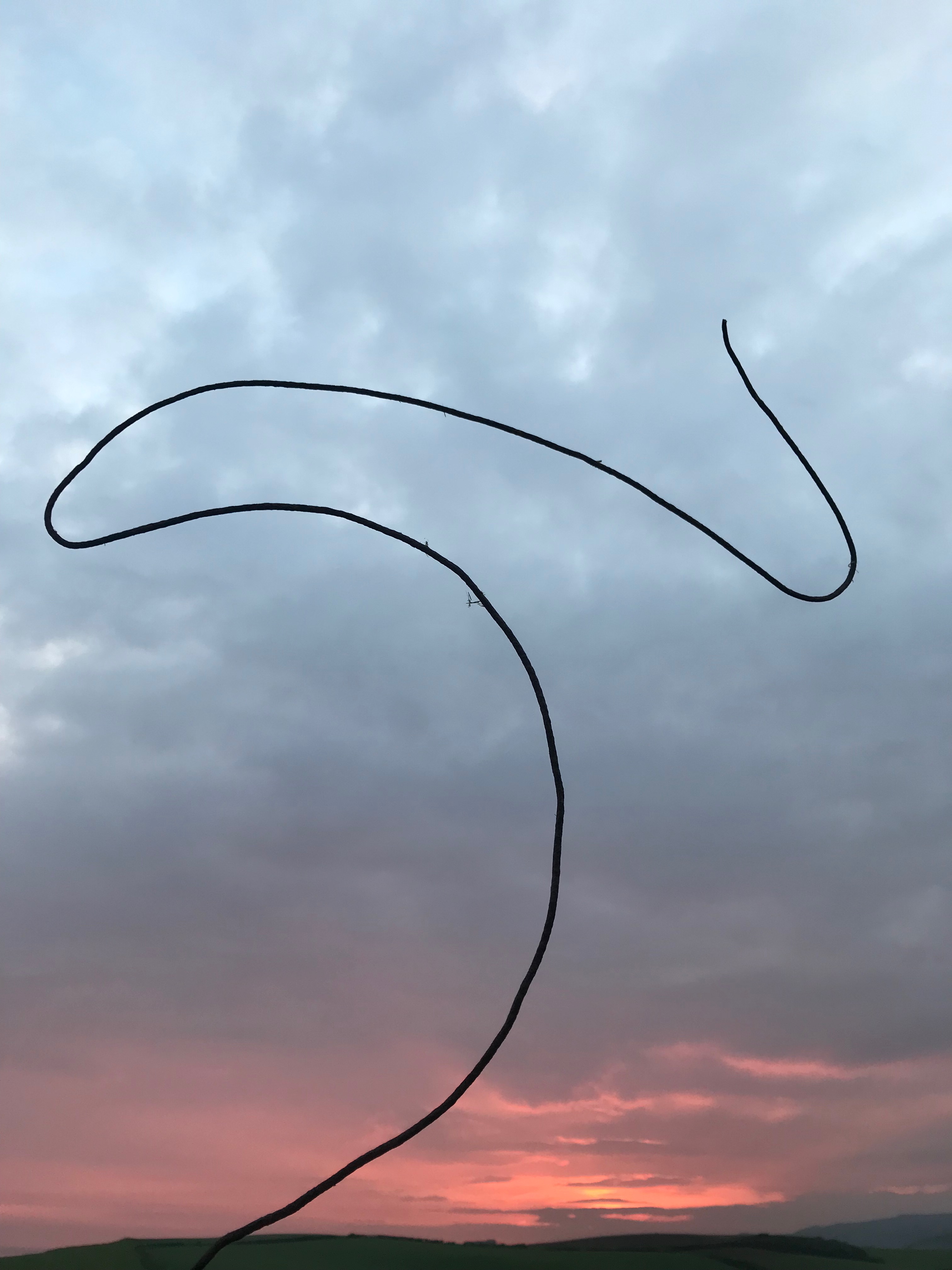
Sketch Against the Sky I
Recycled farm wire
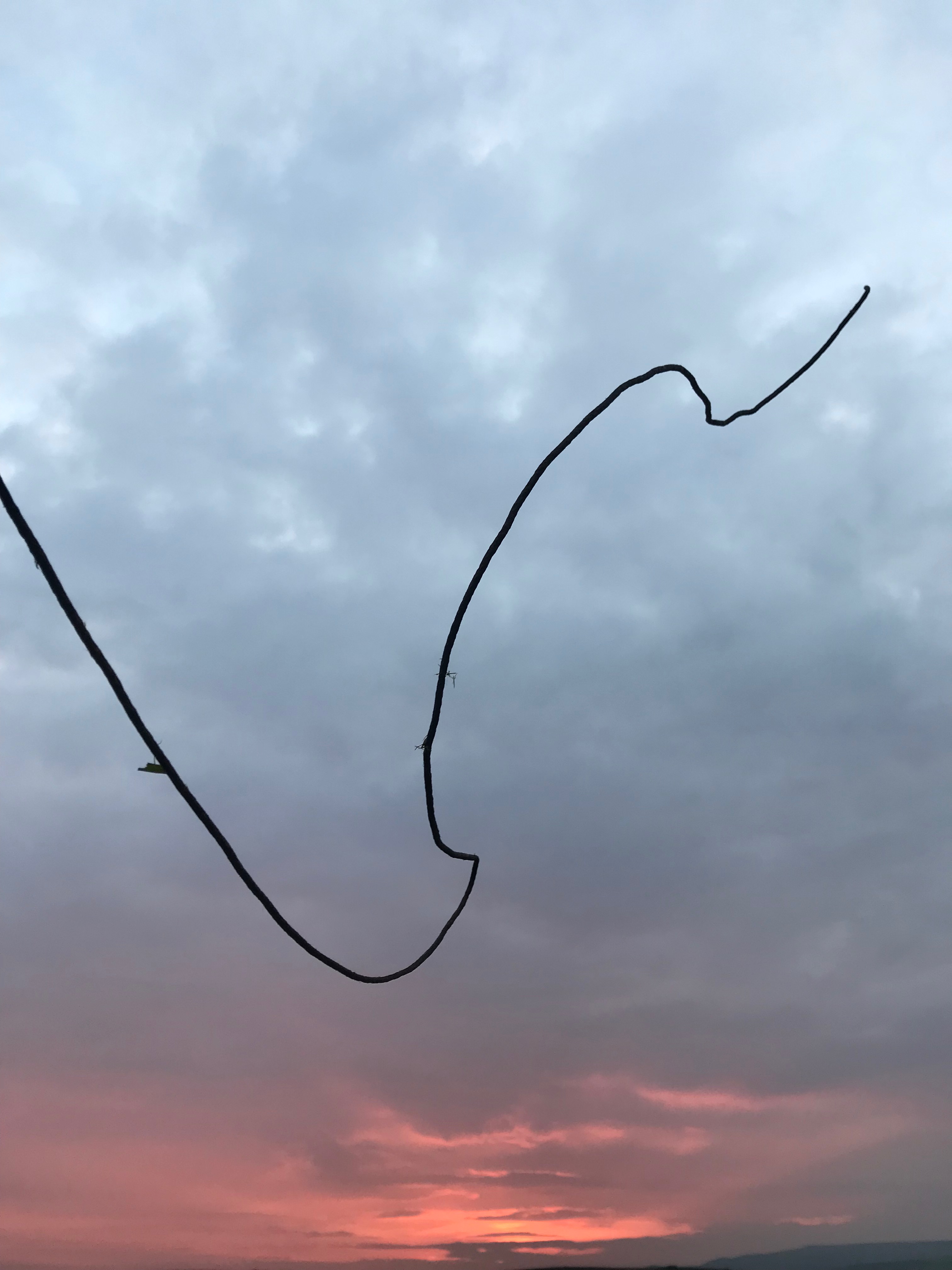
A length of reclaimed farm wire held up to the sky.
A drawn line in open air — the sky momentarily becoming canvas.
Freed from its usual function of boundary and enclosure, the wire becomes a gesture: a simple mark against light.
Title: ‘Sketch against the sky 2’ – recycled farm wire
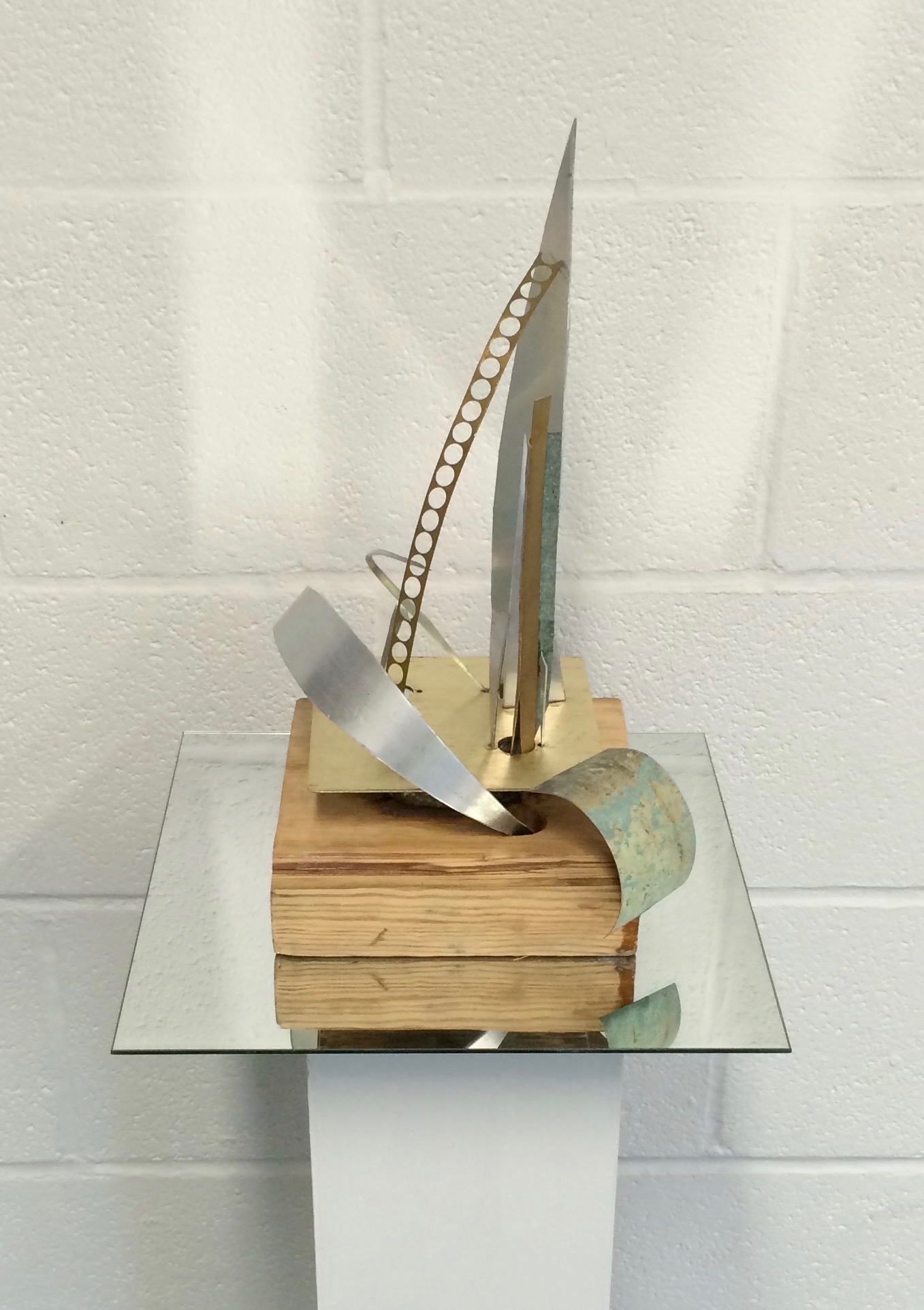
Architectural Shaping
Recycled metal, wood, mirror
This assemblage developed while I was reading about Frank Gehry’s architectural journey and the experimental processes behind his buildings.
Constructed from reclaimed metal and wood, with mirrored elements that fracture and extend the form, the piece reflects on the dialogue between imagination and engineering. It is a small tribute not only to Gehry’s sculptural approach to architecture, but also to the often unseen engineers whose structural thinking allows such forms to stand.
The work considers architecture as both drawing in space and negotiated balance — where vision and calculation meet.
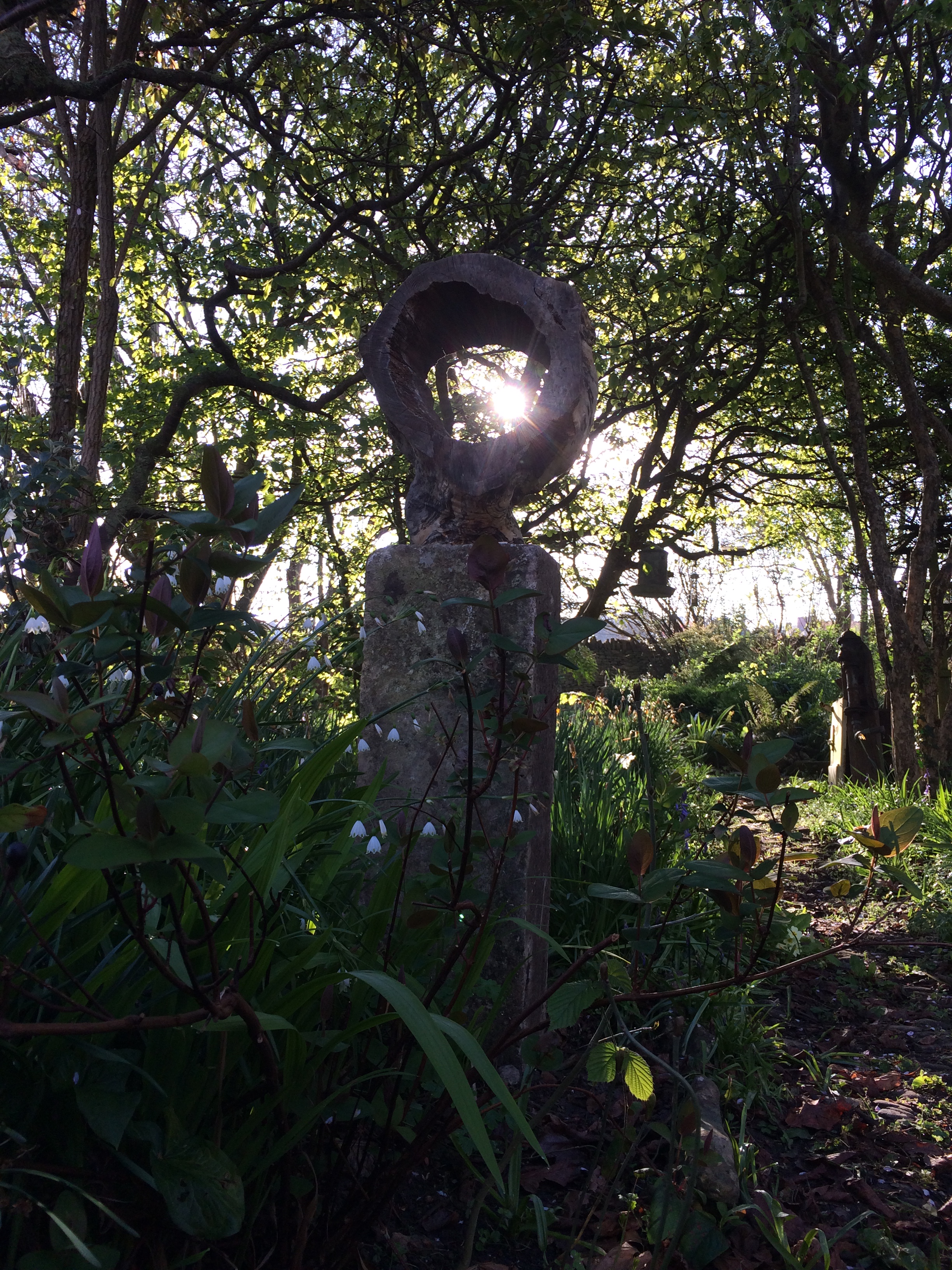
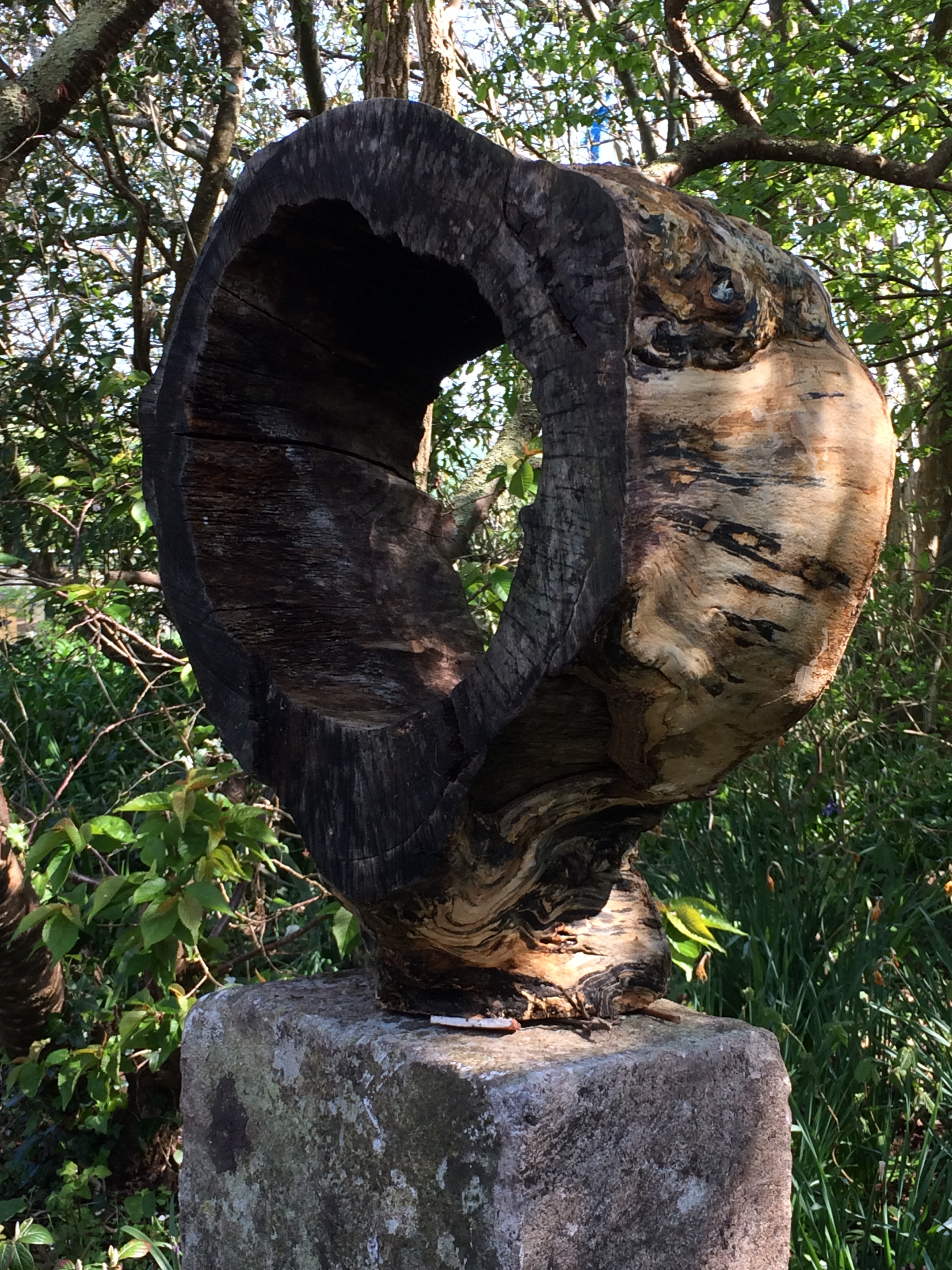
Sun Rise, Sun Set
Hollowed tree trunk on stone plinth
A hollowed tree trunk placed on a stone plinth and aligned east to west.
Left untreated, the wood is exposed to weather and time and will gradually return to the elements.
Placed east – west, the work simply marks the passage of light.
Tree Shaping
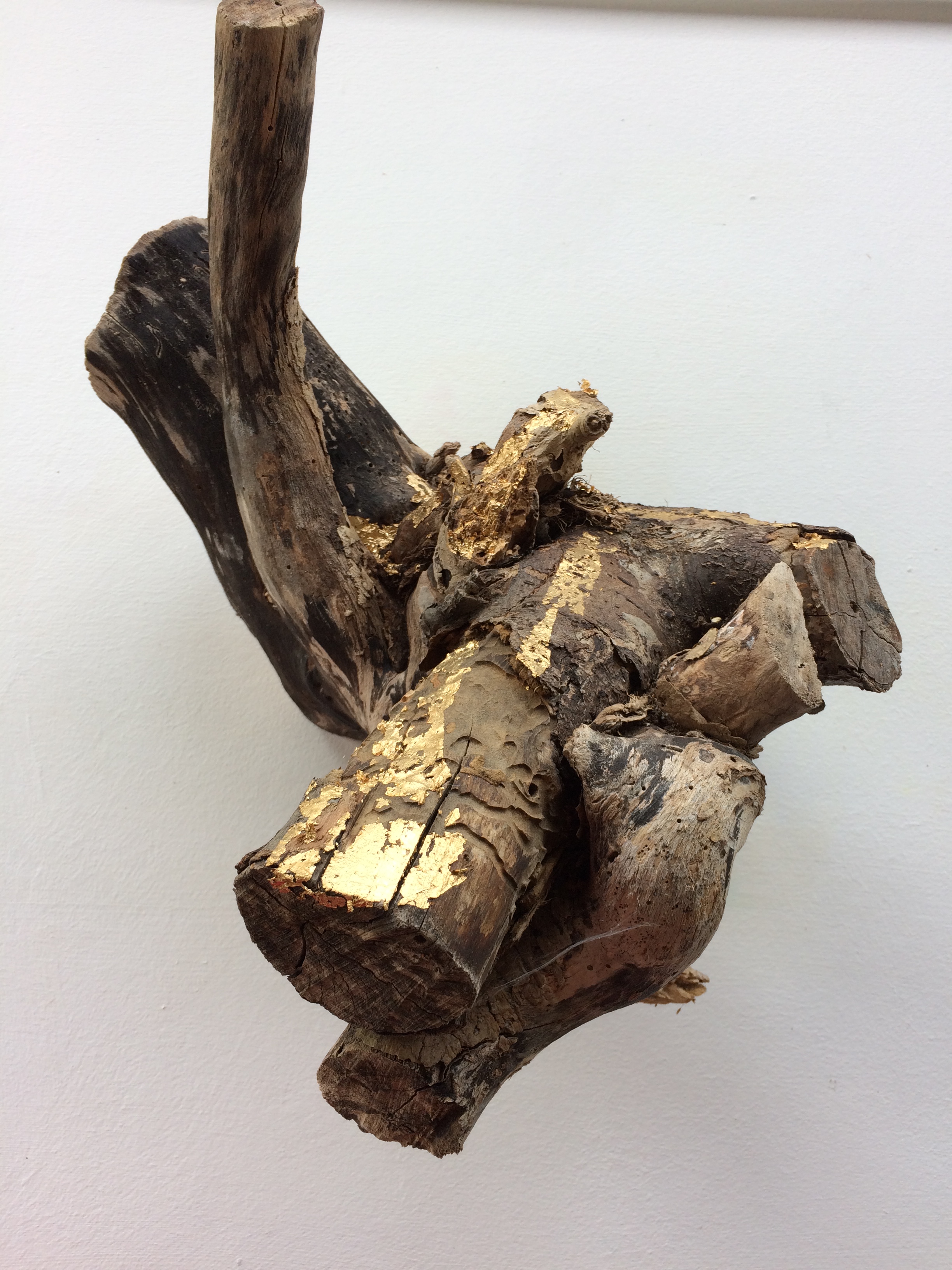
Wood, gold leaf
Wood marked with gold leaf to trace its naturally formed contours.
The gilding highlights the shaping already present — growth directed by wind and time.
Left untreated, the work will gradually weather, degrade and return to the earth.
Spirits Rising
After visiting a vehicle scrap yard, I began this work. Walking among the wrecked cars, I noticed the faint imprint of human hands pressed against the inside of a shattered windscreen. The gesture stopped me. It was both present and absent — a trace of impact, of fear, of survival or loss.
In the months that followed, I made this glass sculpture using fragments of smashed windscreen glass collected from the site, alongside pieces from a large pane of toughened glass that I deliberately shattered for the project. The breaking was part of the making.
This was an intensely emotional work to construct. It held both violence and release — fracture and ascent.
After exhibiting the piece, I placed it outside and allowed it to weather. Over time it deteriorated completely and is now gone.
It marked the beginning of my willingness to let work return to the elements — to make, and to release.
I sometimes wish I still had it. Perhaps one day I will make it again.

Option 3 — Quietly reflective (my recommendation for this piece)
Below: Spirits Rising took many months to resolve. The work was built through careful layering and repositioning, each stage requiring pause before the next. The process was slow, deliberate and emotionally charged.


The Plight of the Honey Bee
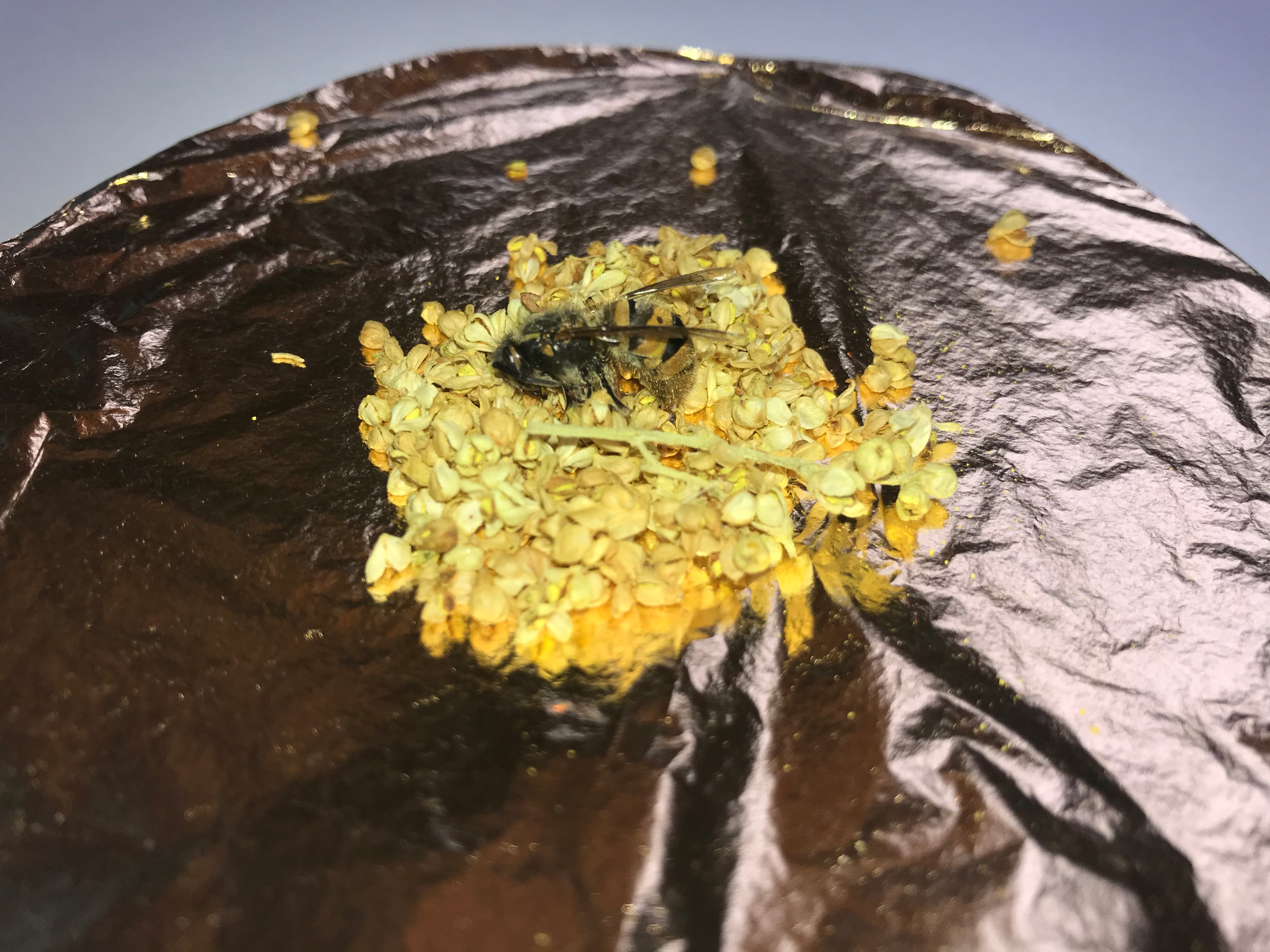
Recycled mirror, gold leaf, olive tree pollen, lifeless bee
A small-scale assemblage incorporating recycled mirror, gold leaf and olive tree pollen, centred around a lifeless honey bee. The mirrored surfaces fragmented light, while the gold and pollen offered a fragile counterpoint to the stillness of the bee.
Pollinators are essential to ecological balance and food systems, yet their decline — linked in part to habitat loss and the widespread use of insecticides — remains an ongoing concern. The work held a quiet tension between value and vulnerability, reflection and absence.
Now degraded and gone, the piece existed only temporarily — echoing the fragility it sought to acknowledge.
 Online Gallery & Consultancy